Our Story
Wilmer, Alabama, was named after Bishop Richard H. Wilmer of the Episcopal Church of Alabama, who lived in the Mobile area from 1865 until his death in 1900. In the early 1890s, the community was centered around two churches—Ellington Methodist Church and Palestine Baptist Church—but growth accelerated when the railroad arrived later that decade, bringing new settlers and establishing a post office. Around 1900, after Ellington Church was destroyed by a cyclone and rebuilt, interest grew for a Baptist church closer to Wilmer. Led by John Evans and J.A. Emmons, who desired alignment with the Mobile and Southern Baptist Convention, Wilmer Baptist Church was officially organized in December 1901 with twenty-five charter members. Land was donated for the church, a building was quickly constructed, and early leadership under pastors Rev. L. N. Brock and Rev. J. M. Kailin helped establish a strong foundation through consistent preaching, revivals, and commitment to Baptist missions and education.
Through the early to mid-20th century, the church steadily expanded its ministries and facilities despite periods of hardship. Regular revival meetings, the addition of a Training Union around 1920, and a shift to more frequent services reflected its growth. A significant moment came in the early 1930s during the pastorate of Rev. W. H. Evans, when his daughter Mary Ruth’s final wish and financial gift inspired the beginning of a building fund for a new sanctuary. Although construction efforts were delayed by pastoral transitions and World War II, momentum resumed under Rev. Fred C. Schatz in the mid-1940s. He led the relocation of the church to a more prominent site and oversaw the planning and construction of a new sanctuary, with the cornerstone laid in 1948. By 1949, the church had moved to full-time services and continued to develop with additions such as a library, pews, a pastorium, and an educational building.
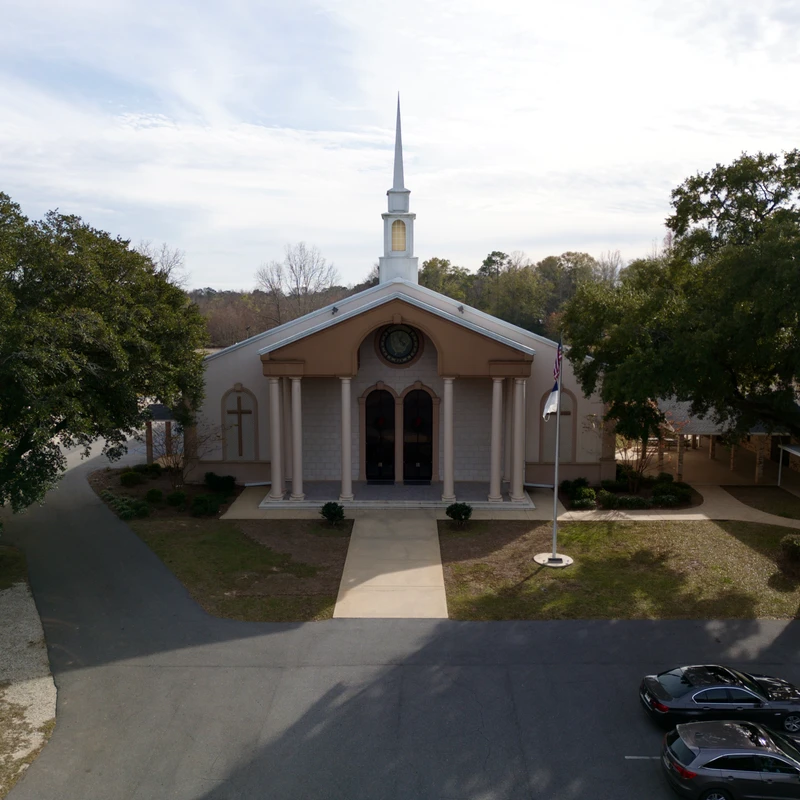
In the latter half of the 20th century, Wilmer Baptist Church experienced significant growth in membership, outreach, and facilities. Under the leadership of pastors like Bro. Terry Irby, the church expanded its missions efforts locally and internationally, even becoming a leading contributor to missions in Alabama in 1971. New ministries—including bus outreach, children’s programs, and expanded staff roles—supported a growing congregation, while additional land purchases and building projects accommodated that growth. Major developments included the construction of a Christian Life Center, new educational facilities, and a larger sanctuary dedicated in 2000 with seating for 1,200. By its centennial in 2001, the church had evolved into a vibrant, mission-focused congregation with a strong legacy of faith, community involvement, and commitment to spreading the gospel.